
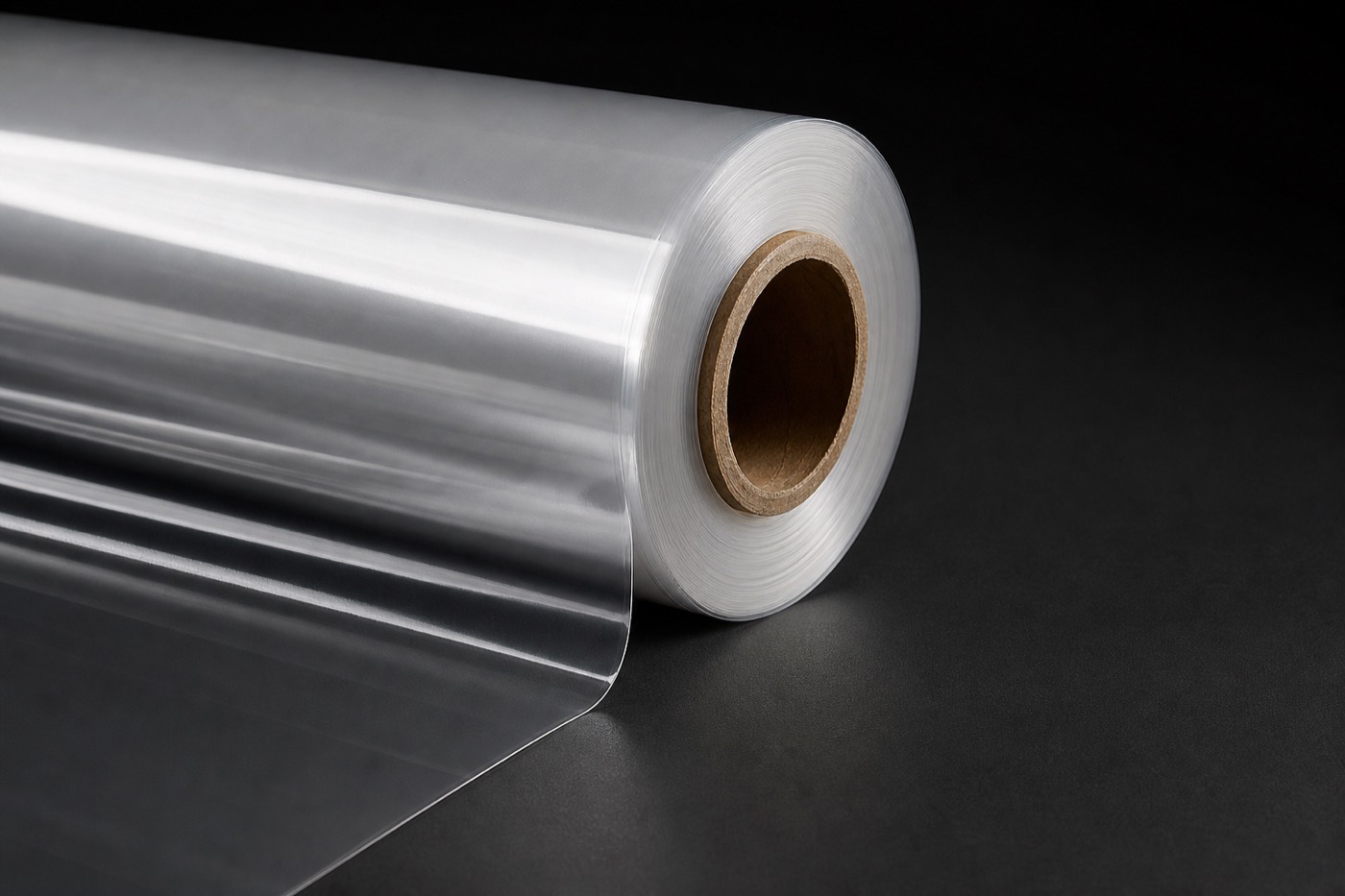
Barrier Film
Transparent AlOx / Metallized Range
From transparent, microwavable, metal-detector-safe AlOx barrier film to fully opaque, near-foil-barrier metallized film and metallized paper — five series covering the high-barrier needs of food, pharmaceutical and personal-care flexible packaging, with OTR as low as 0.05 cc/m²·day.
- Barrier range
- OTR as low as 0.05 cc/m²·day
- Series
- 5 series · 7 model codes
- Applications
- Food · pharma · personal care
- Test methods
- ASTM D-3985 · ASTM F-1249
- Compliance
- FDA · EU · REACH · RoHS · GB 4806.7
What is barrier film? Transparent AlOx vs. opaque metallized
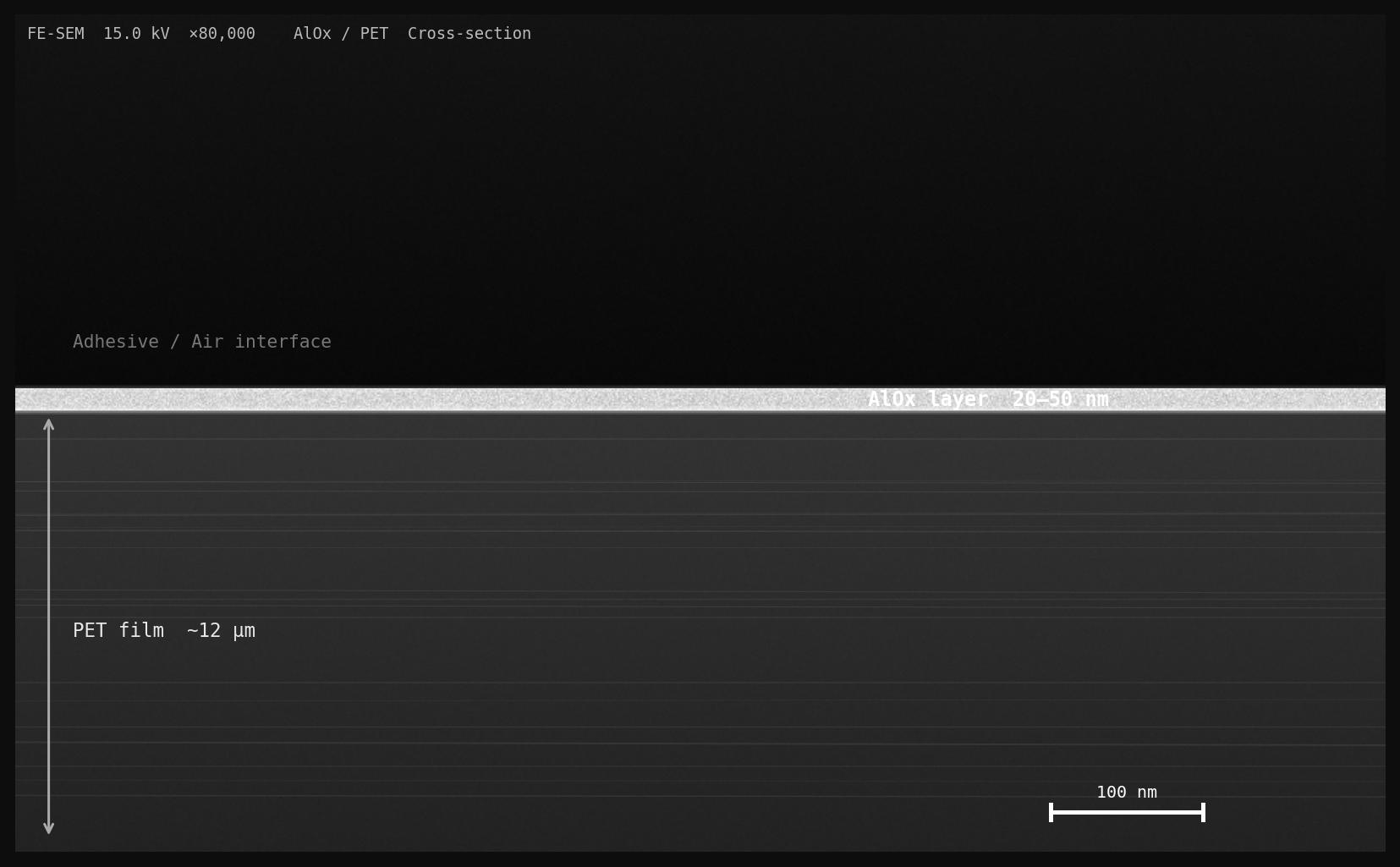
Barrier film is a functional film made by physical vapor deposition (PVD) of a layer of aluminum oxide (AlOx) or metallic aluminum onto a PET, BOPP or PLA substrate. This substantially lowers the oxygen transmission rate (OTR) and water vapor transmission rate (WVTR), protecting food, pharmaceutical and personal-care contents from oxidation and moisture damage while extending shelf life.
The transparent AlOx series is coated with aluminum oxide (a non-metal) — it stays transparent so contents remain visible, passes through metal detectors, and is microwavable. The opaque metallized series is coated with a metallic aluminum layer, giving complete light-blocking and UV barrier, suited to light-sensitive contents such as coffee, milk powder and oils; premium-grade specifications approach the barrier performance of aluminum foil. The two directions are complementary by application, not substitutes for one another.
Transparent barrier series — AlOx PET / BOPP / PLA
Physical vapor deposition of aluminum oxide (AlOx) onto PET / BOPP / PLA substrates. Key features: transparent so contents stay visible, microwavable, metal-detector compatible, retort-capable, and supports mono-material recyclability. Depending on application, it can replace aluminum foil, KPET / KBOPP / KBOPA, SiOx, BOPA, EVOH and co-extruded film.
Transparent AlOx PET
| OTR | ≤0.2–2.0 cc/m²·day |
| WVTR | ≤0.3–2.0 g/m²·day |
| Light transmission | ≥89% |
| Properties | Transparent, microwavable, metal-detector compatible; premium grades retort to 121°C; supports mono-material recyclability |
| Applications | General food, dry goods, supplements, retort pouches, premium shelf-visible packaging (e.g. coffee) |
Transparent BOPP / PLA
| OTR | BOPP 0.3–1.0; PLA (AlOx grade) 2–60 cc/m²·day |
| WVTR | BOPP 0.42–2.0; PLA (AlOx grade) 2–60 g/m²·day |
| Properties | BOPP is printable and mono-material recyclable, with select grades boil- or retort-capable to 121°C; PLA is biodegradable and compostable (the uncoated PLA film grade offers 93% light transmission) |
| Applications | Recyclable flexible packaging, eco-friendly replacement for conventional plastic film, compostable packaging |
Transparent AlOx PET — AX-TP Series (Substrate 12µm, TP60R 13µm)
| Model Number | OTR cc/m²·day | WVTR g/m²·day | Light Transmittance | Heat Resistance | Typical Application |
|---|---|---|---|---|---|
| AX-TP10B | ≤2.0 | ≤2.0 | ≥89% | Boil-resistant | General food, dry goods |
| AX-TP30B | ≤0.8 | ≤1.0 | ≥89% | Boil-resistant | High-barrier dry goods, health supplements |
| AX-TP40B | ≤0.5 | ≤1.5 | ≥89% | Boil-resistant | High-barrier, printable |
| AX-TP45R | ≤0.5 | ≤0.8 | ≥89% | Retortable 121°C | Ready meals, retort-processed foods |
| AX-TP50R ★ | ≤0.5 | ≤0.5 | ≥89% | Retortable 121°C | Aluminum foil alternative, coffee, shelf visibility required |
| AX-TP60R ★ | ≤0.2 | ≤0.3 | ≥89% | Retortable 121°C | Ultra-high barrier transparent, extended freshness lock |
Transparent BOPP / PLA — AX-TB / AX-TL Series
| Model Number | Material | OTR | WVTR | Heat Resistance | Characteristics |
|---|---|---|---|---|---|
| AX-TB20 ‡ | BOPP AlOx, substrate 18µm | 1.0 | 2.0 | — | Transparent, printable, single-material structure design |
| AX-TB25B ‡ | BOPP AlOx, substrate 18µm | 0.8 | 1.3 | Boil-resistant | Transparent, printable, boil-resistant, single-material structure design |
| AX-TB30 | BOPP AlOx, substrate 18µm | 0.3 | 1.5 | — | Transparent, printable, high-barrier, single-material structure design |
| AX-TB40R ¶ ★ | BOPP SiOx, thickness specification under confirmation | 0.35 | 0.42 | Retortable 121°C | Transparent, retortable, single-material structure design |
| AX-TL05 | PLA (pure) | — | — | Heat-sealable | Biodegradable, compostable, 93% light transmittance (eco-friendly alternative to conventional plastic film) |
| AX-TL10 | PLA AlOx | 2~60 | 2~60 | Heat-sealable | Transparent, biodegradable, heat-sealable 7.2N |
Common physical properties (AX-TP series): density 1.4 g/cm³, tensile strength ≥170 MPa, elongation at break ≤200%, AlOx adhesion ≥3.0 N/15mm, surface tension AlOx side ≥52 / PET side ≥42 mN/m. Contact us for the full TDS on individual grades.
Opaque barrier series — Metallized PET / BOPP / Paper
Vacuum aluminum metallizing for complete light-blocking and UV barrier, protecting light-sensitive contents (coffee, milk powder, oils, supplements). The highest-grade specifications approach the barrier performance of aluminum foil, and mono-material recyclable structures are available.
Opaque Metallized PET
| OTR | 0.10–1.0 cc/m²·day |
| WVTR | 0.10–1.0 g/m²·day |
| Aluminum adhesion | 2.5–4.0 N/15mm |
| Properties | Complete light-blocking and UV barrier; premium grades approach aluminum-foil barrier performance; select grades are boil- and retort-capable |
| Applications | Light-sensitive contents such as coffee, milk powder, oils and supplements; premium grades suit vacuum insulation panels, electronics packaging, and aluminum-foil replacement |
Metallized BOPP
| OTR | 0.12 cc/m²·day |
| WVTR | 0.28 g/m²·day |
| Properties | Highest barrier performance in the range; can serve as the mid-layer in a mono-material recyclable structure |
| Applications | High-barrier recyclable flexible packaging |
Metallized Paper / Metallized PLA
| OTR | Paper 0.05; PLA 2–60 cc/m²·day |
| WVTR | Paper 0.16; PLA 2–60 g/m²·day |
| Properties | Metallized paper is print-ready and pouch-ready, basis weight 70g, heat-seal strength 7.6N, an eco-friendly replacement for plastic; metallized PLA is opaque, biodegradable and heat-sealable |
| Applications | Paper-feel eco-packaging, biodegradable light-blocking packaging |
Opaque Vacuum-Metallized PET — AX-MP Series (12µm)
| Model Number | OTR | WVTR | Aluminum Adhesion N/15mm | Heat Resistance | Characteristics / Application |
|---|---|---|---|---|---|
| AX-MP30 | ≤1.0 | ≤1.0 | ≥2.5 | — | High adhesion, high composite strength |
| AX-MP40 | 0.70 | 0.80 | 2.6 | — | Ultra-high barrier, opaque |
| AX-MP50 | 0.40 | 0.60 | 2.8 | — | Ultra-high barrier, opaque |
| AX-MP60 ★ | 0.25 | 0.25 | 3.0 | — | Near-aluminum foil, complete opacity UV resistance (coffee/milk powder/oils) |
| AX-MP70 ★ | 0.10 | 0.10 | 2.5 | — | Strongest metallization, approaching aluminum foil, complete opacity UV resistance (vacuum thermal insulation panels/electronics/aluminum foil alternative) |
| AX-MP30R ★ | 1.0 | 1.0 | 4.0 | Boil + retort resistant | Chemical coating, heat-resistant, two-layer alternative to three-layer cost reduction |
Opaque BOPP / Paper / PLA — AX-MB / AX-PR / AX-ML Series
| Model Number | Material | OTR | WVTR | Characteristics |
|---|---|---|---|---|
| AX-MB65 ★ | Metallized BOPP | 0.12 | 0.28 | Strongest barrier in full series, middle layer of single-material structure design |
| AX-PR10 § | Metallized paper | Specification under confirmation | Specification under confirmation | 70g basis weight, heat-sealable 7.6N, can be directly printed and converted into bags |
| AX-ML10 | Metallized PLA | 2~60 | 2~60 | Opaque, biodegradable, heat-sealable |
Holographic Metallized BOPP
| OTR | 25 cc/m²·day |
| WVTR | 0.44 g/m²·day |
| Thickness | 20 µm |
| Aluminium layer adhesion | 3.0 N/15mm |
| Properties | Holographic decoration combined with mono-material recyclability; replaces aluminium foil or VMPET as the middle layer of a PP or PE three-layer laminate |
| Applications | Dried fruit, tea, coffee, chocolate, dehydrated food, spices and pharmaceutical packaging; blocks visible light and UV to extend shelf life |
Additional series available on request (TDS on request): metallized CPP (sealant), MDO-PE, holographic BOPP. Safety / solar-control film (5–70% light transmission options) is for electronics and industrial use, unrelated to food packaging, and is not listed on this page.
Barrier performance comparison — AlOx vs. conventional metallized (K) coated film
Performance comparison between transparent AlOx film (AX-TP) and conventional PVDC (K)-coated film (KOPP / KPET / KOPA):
| Property | KOPP (BOPP) | KPET | KOPA | Aqualux AlOx (AX-TP) |
|---|---|---|---|---|
| Basis weight g/m² | 20 | 20.3 | 20.1 | 16.6 (lighter) |
| OTR cc/m²·day | 15 | 12 | 8 | 0.5–2.0 |
| WVTR g/m²·day | 4 | 6 | 10 | 0.5–2.0 |
| Light transmission | 86% | 87% | 86% | 89% |
| Environmental | Releases toxins when incinerated; banned in the EU / Japan | Surface layer safe and eco-friendly | ||
* Test conditions: OTR — ASTM D-3985 @23°C/0%RH; WVTR — ASTM F-1249 @38°C/100%RH. The figures above are series reference values; actual performance depends on the laminate/converting process, and we are responsible for the film's own performance only.
Applications
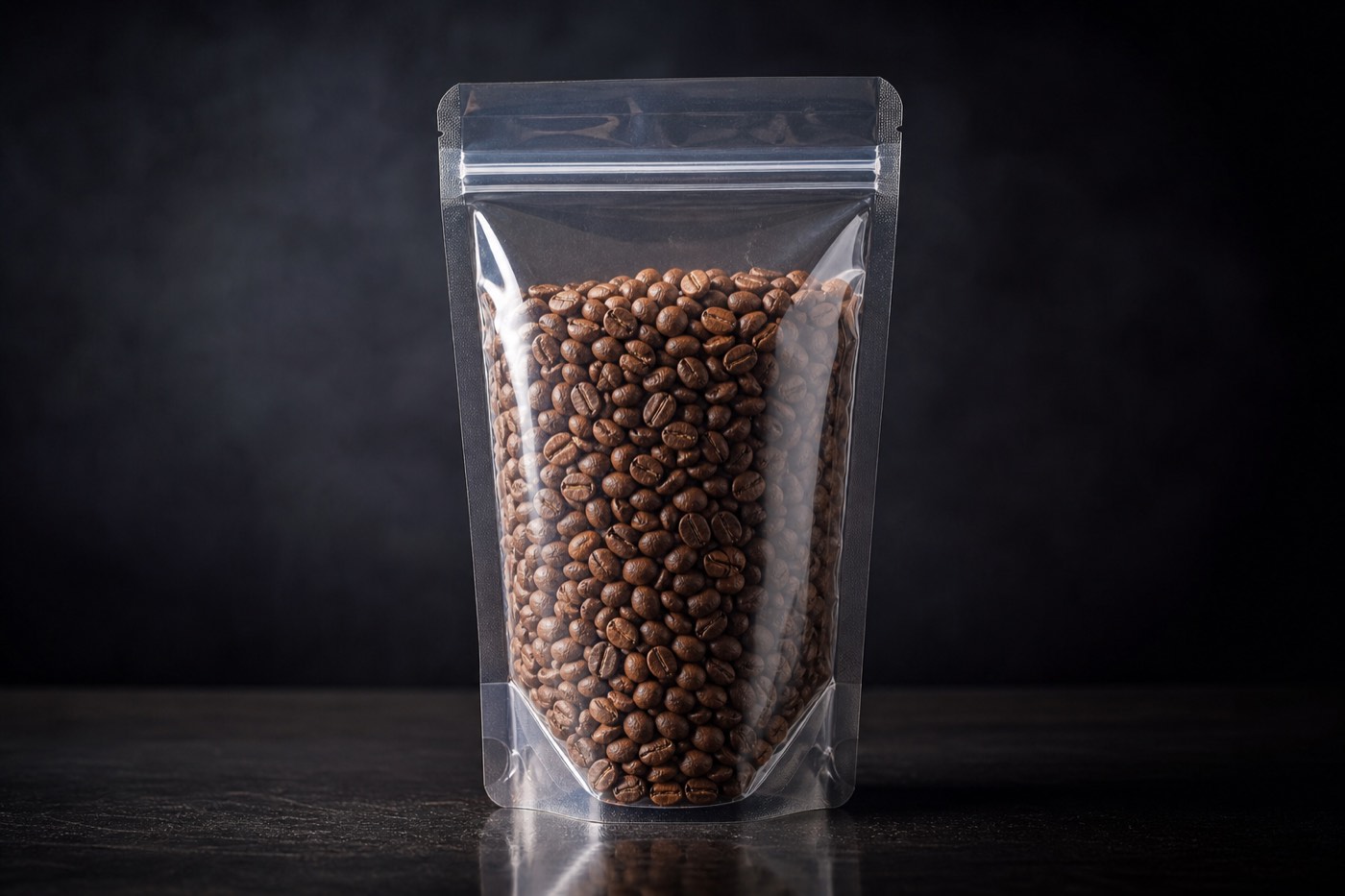
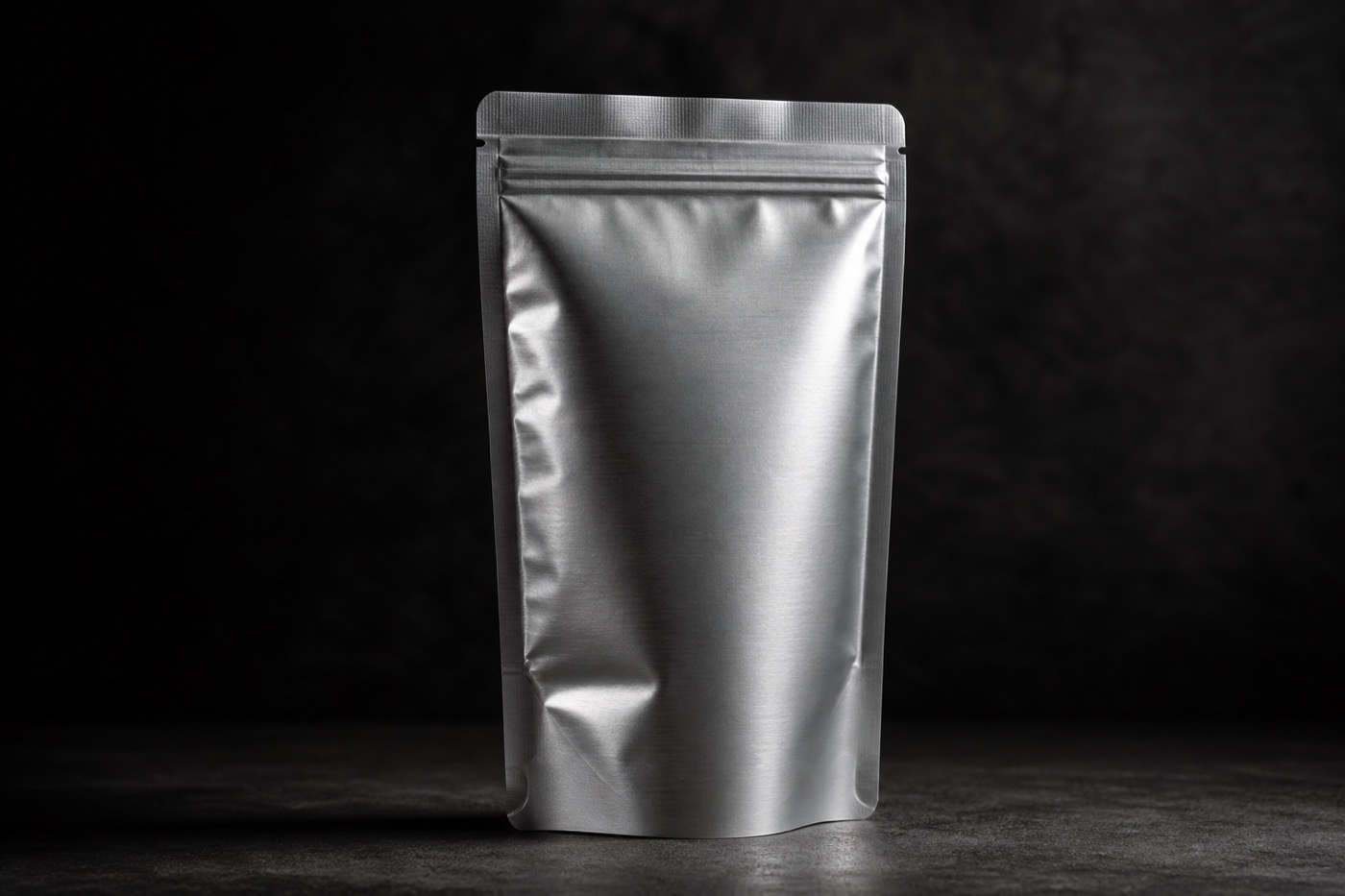
For detailed application guidance, see our technical article: Aluminum Oxide (AlOx) Transparent Barrier Film — Technical Guide, covering the R2R vacuum coating process and a performance comparison with conventional aluminum foil.
Frequently asked questions
How do I choose between the transparent series and the opaque series?
Choose the transparent AlOx series if contents need to stay visible or your packaging line must pass metal detection. Choose the opaque metallized series if you need complete light-blocking to protect light-sensitive contents. Tell us your application and we'll help confirm the right series.
How do I interpret the OTR and WVTR values?
Lower values mean stronger barrier performance and longer shelf life. Values are stated per ASTM D-3985 (OTR) and ASTM F-1249 (WVTR) test conditions; actual performance should be confirmed against the specification sheet and sample testing.
Can these films replace aluminum foil?
Select premium-grade specifications already approach the barrier performance of aluminum foil. Depending on the application, they can replace conventional aluminum foil or barrier materials such as KPET / KBOPP / KBOPA, SiOx, BOPA and EVOH, while offering advantages such as lighter weight, microwavability or recyclability.
Can I request the full TDS or samples for a specific grade?
Yes. The figures on this page are series reference ranges; contact us for the full physical data on individual grades, or samples, and we'll help confirm the specification, laminate structure recommendation and pricing.
Need barrier film samples?
Tell us about your product's characteristics, laminate structure and barrier requirements — Lihyang will help you confirm the right series, lead time and pricing, with free samples available.